Why the Distributor Defines the Standard, Not the Manufacturer Alone
In professional tool work, quality is often assumed to originate solely at the manufacturer.
In practice, that assumption is incomplete.
A shear can be produced by a reputable manufacturer and still arrive in the hands of a professional in a condition that does not meet professional standards. The determining factor is not only how a tool is made, but how it is selected, handled, verified, and delivered.
This post explains why the distributor—not the manufacturer alone—is where the effective quality standard is established.
Manufacturing Is a Capability, Not a Guarantee
Manufacturers produce within ranges, not absolutes.
Even at high levels of craft and engineering, production includes:
Variance in steel batches
Differences in heat treatment outcomes
Geometry tolerances
Finishing variation
QC thresholds that are appropriate for their market, not necessarily yours
Manufacturing defines what is possible.
It does not define what is delivered.
Distribution Is the Final Filter
The distributor is the last authority before the tool reaches a professional user.
That role includes:
Selecting which production runs enter a market
Accepting or rejecting tolerances
Inspecting incoming tools
Determining whether further verification or correction is required
Standing behind the tool once it is in service
This makes the distributor the practical standard-holder, regardless of brand prestige or origin.
Market Segmentation Is Real
Tools are not distributed globally as identical products.
Manufacturers often:
Produce different quality tiers
Allocate higher or lower tolerances by market
Adjust finishing levels based on demand and price sensitivity
Ship different selections to different regions
A tool’s country of origin does not guarantee that the highest available grade was exported to every market.
This is not negligence.
It is normal industrial behavior.
Why Country of Origin Is an Incomplete Signal
Origin can indicate tradition, capability, and history.
It does not guarantee selection discipline.
A professionally supplied tool must be judged by:
Its actual geometry
Its steel condition
Its consistency across units
Its readiness for professional use
These attributes are determined after manufacturing, not during branding.
Accreditation Lives at the Distribution Layer
A distributor who operates to a professional standard does more than resell tools.
They:
Define acceptance criteria
Reject sub-standard units
Perform secondary inspection or correction
Ensure tools meet professional readiness before delivery
Take responsibility for performance over time
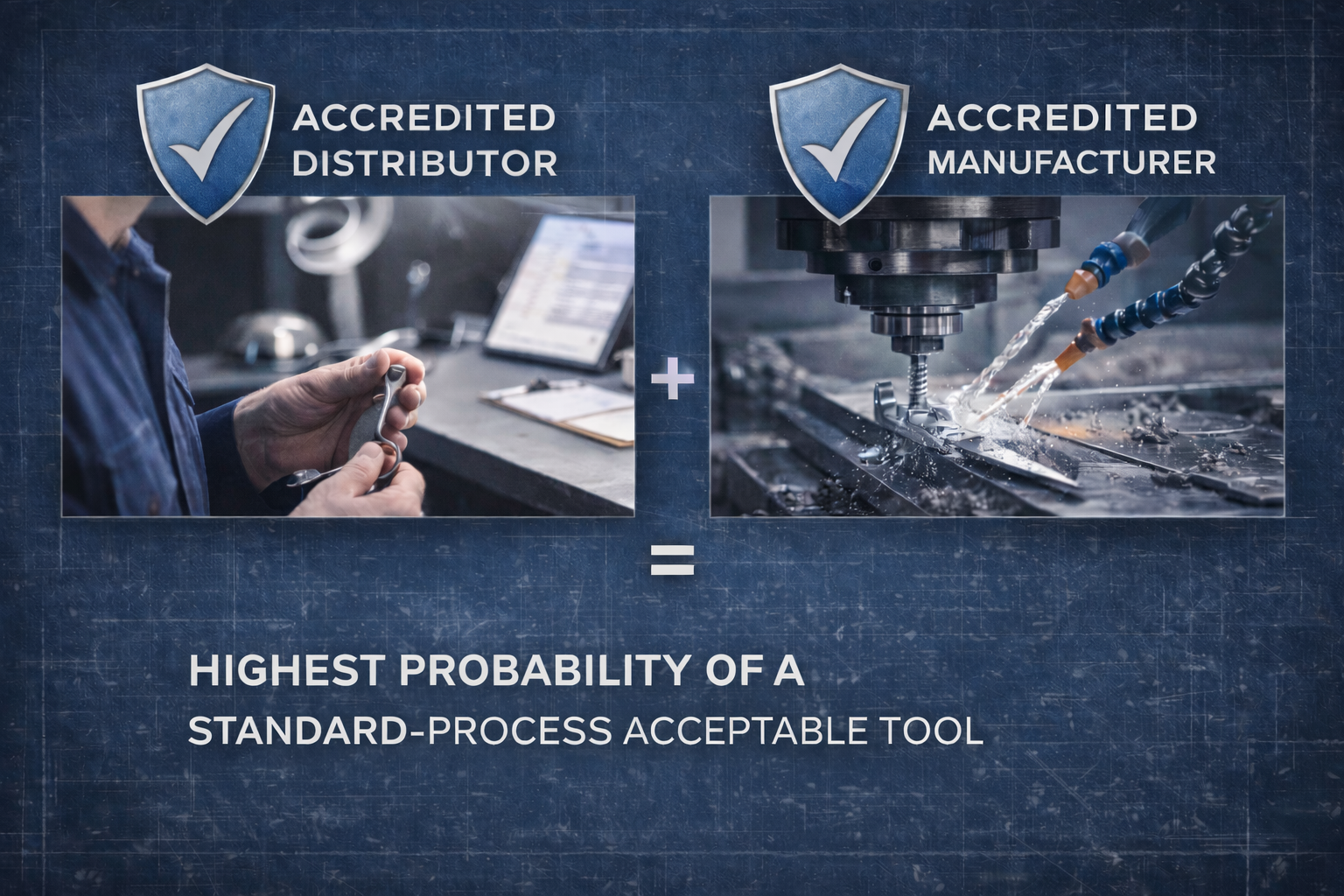
When a distributor and manufacturer are aligned under a shared accredited standard, the probability of receiving a reliable, high-quality tool increases dramatically.
That alignment matters more than reputation alone.
The Cost of Ignoring Distribution Standards
When distribution is treated as logistics rather than stewardship, professionals experience:
Inconsistent performance between identical models
Tools that require immediate correction
Premature failure attributed incorrectly to use or technique
Erosion of trust in otherwise capable manufacturers
These failures are often blamed on the tool.
In reality, they originate in the gap between manufacturing and delivery.
Institutional Sharpening Standards
Professional quality is not a brand attribute.
It is a process outcome.
The highest probability of receiving a reliable, professionally ready tool occurs when:
The manufacturer operates within disciplined production standards
The distributor enforces independent acceptance criteria
Both are aligned under a shared, accredited definition of readiness
Manufacturing creates potential.
Distribution determines reality.
Any professional evaluating tools must understand this distinction.