
Constraint-Based Sharpening & Error Reduction: The CX Pro Keep Control System
At the Battle Born Blade Sharpening Institute, control is not defined by freedom of movement, but by constraint applied intentionally.
The CX Pro Keep Control system is designed around a different philosophy than operator-free automation or fully manual platforms. Its purpose is to limit error pathways, stabilize critical relationships, and reduce outcome variance during professional shear sharpening.
This post documents how the Keep Control system functions within an accredited sharpening environment and why constraint-based systems play a critical role in process reliability.
Constraint as a Form of Precision
In sharpening, variability is not always caused by lack of skill.
It is often caused by excess degrees of freedom.
When too many variables are left unconstrained, even experienced technicians can introduce:
Angle drift
Uneven material removal
Inconsistent bevel relationships
Cumulative geometry distortion over service cycles
The CX Pro Keep Control system addresses this by physically bounding key variables, allowing technicians to focus on verification rather than constant correction.
Error Reduction Through Mechanical Guidance
The Keep Control platform emphasizes:
Guided positioning
Stable reference planes
Repeatable alignment
This does not remove responsibility from the technician.
It narrows the margin of error.
In accredited environments, this matters because quality is defined not by a single successful result, but by repeatable compliance with tolerance thresholds.
Application in Accredited Shear Processing
Within an Accredited Technical Center, the CX Pro Keep Control system is particularly valuable during:
Training and skills standardization
High-volume professional service cycles
Geometry correction where deviation risk is high
By constraining movement and alignment, the system supports:
Consistency between technicians
Reduced rework
Easier verification during post-process inspection
Relationship to Operator Judgment
Constraint-based systems are sometimes misunderstood as “deskilling” tools.
That interpretation is incorrect.
The CX Pro Keep Control system does not replace judgment — it protects it.
By reducing mechanical variability, the technician’s attention can be directed toward:
Steel response
Contact behavior
Inspection and verification
Judgment becomes clearer when noise is removed.
Integration Into a Regulated Workflow
As with all machine-assisted processes, the Keep Control system is never treated as a final authority.
Its output is validated through:
Structural integrity audits
Ride-area inspection
Inside-edge verification
Manual confirmation of performance
The system supports compliance — it does not define it.
Manufacturer Reference (Process Transparency)
For technicians or institutions seeking formal specifications or manufacturer documentation, information on the CX Pro Keep Control system can be reviewed directly through the manufacturer:
👉 CX Pro Keep Control — Official Manufacturer Information
Manufacturer documentation should always be consulted to ensure proper configuration, maintenance, and appropriate use. The convex sharpening process is more consistent with this machines motor shaft.
Institutional Position
Precision is not only about freedom of movement.
It is about knowing what should not move.
The CX Pro Keep Control system supports accredited shear sharpening by constraining critical variables, reducing error pathways, and enabling consistent, verifiable outcomes across technicians and service cycles.
That role makes it a valuable component in regulated sharpening environments where standards matter more than speed.
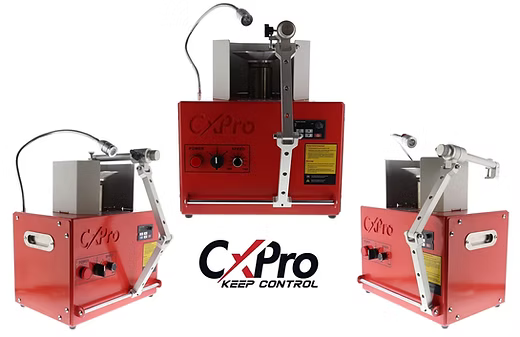
CX-Pro Keep Control System - Precision Sharpening
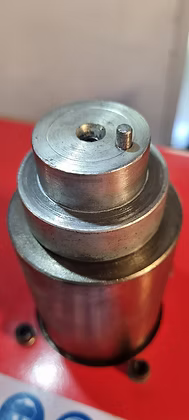
Cx Pro -Keep Control Shaft